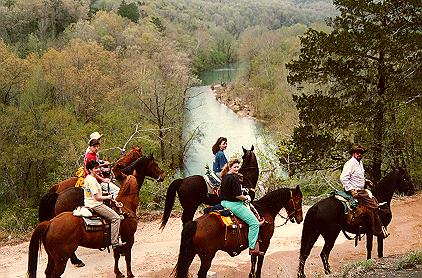
| One of the many ways to enjoy the Buffalo River is by
horse. Designated trails for horseback riding are located in all districts of the national
river. A brochure describing the designated trails is available from visitor contact
stations. Numerous old roads, now closed to motor vehicles, provide riding opportunities
for those willing to explore areas without the benefit of trail signs.
Two camping areas in the upper river have been designated for
visitors with horses. These areas, at Steel Creek and Erbie, are accessible by vehicle and
provide basic facilities such as fire grates and vault toilets. Both camps are located
adjacent to horse trails. Neither site is designated to accommodate more than ten vehicles
with trailers.
Middle river horse users may overnight at Woolum. They are not
permitted, however, in other developed campgrounds. Visitors to the Lower Buffalo
Wilderness Area may camp at Big Creek or Hathaway Gap Trailheads. Water for stock is
unavailable, however, and there are no facilities in these areas.
Because of their size, horses have a greater impact on trail
surfaces then do hikers. Many hiking trails were not designed to accommodate horse use.
Please keep horses off those trails designated for hiking only. Horses may be ridden on
old roadbeds and across gravel bars but should not be taken cross country.
Large groups of riders cause greater harm to the environment than do
small groups. Riders, like all backcountry travelers, should seek ways to reduce their
impact on the environment. Travel with horses requires particular care on the part of
riders to minimize their impact on trails and on campsites. As a rider your goal is to
make decisions and choose practices that will cause the least amount of damage and leave
only short-term impacts.
- Horses should not be tied directly to trees. Use a "high picket
line" rigged outside of your camp area or hitch racks where provided.
- Traveling outside the established tread, to ride abreast or to avoid
rocks or mud, breaks down the trail edge and widens the trail. It can also lead to the
development of multiple trails.
- Riders should remove or scatter horse manure from camp areas,
trailheads, or loading areas.
- When watering horses or crossing streams, use rocky areas to prevent
banks from caving in and leaving a permanent scar.
- Where available, camp in previously used sites away from streams and
trails.
- Tie horses off the trail and away from wet or boggy areas. Rocky
ground that catches a breeze will discourage insects and allow horses to stand quieter.
- When you leave, there should be little or no evidence of your stay.
"Pack it in, pack it out."
There are currently no commercial horse outfitters operating at the
Buffalo National River. |